See It At Home is my interior design notebook for affordable rooms
built from Amazon finds. Every product here is chosen as part of a
room story, and product links are affiliate links that may earn from
qualifying purchases.
This week I treated Amazon like the design library: fast to browse,
easy to compare, and full of budget pieces that can become a real
room when they are chosen with intention.
The bias is intentional
Amazon is the source. The room is the filter.
I am not trying to pretend this site is retailer-neutral. See It At
Home is an independent Amazon-focused interiors blog. I like designing
with Amazon products because the selection is wide, prices are often
approachable, and shipping can be quick. The design work is in the
editing: finding the pieces that belong together, explaining why they
work, and showing the room before asking anyone to click.
Editor's note
A simple room usually starts with one honest problem.
For this first bedroom, the problem was not style. It was emptiness:
no visual anchor, no warm light, and nothing on the wall. So the picks
are intentionally basic: a dark mattress to ground the room, a slim
lamp to make the corner useful, and a small wall piece to add texture.
The products are Amazon affiliate-linked because this site is built
around shoppable Amazon room stories.
Latest story
Budget bedroom refresh with three Amazon finds
A calm starter room using a mattress, a small-footprint lamp, and
hanging greenery. The idea is not to fill every corner. It is to
make the room feel deliberate enough that the next purchase can wait.
The goal is not to make every room look expensive. The goal is to
notice what is missing, pick the few pieces that do the most work,
and leave enough budget for real life.
1
Find the room problem
Empty corner, flat lighting, blank wall, no visual anchor. Each
guide starts with the problem before it starts with products.
2
Choose the few useful pieces
A tight room budget works better when every item has a job:
comfort, light, texture, storage, or scale.
3
Check the retailer page
Amazon has the current price, color options, size details, reviews,
delivery timing, and return information.
Recommendations should earn their place in the room.
A product does not belong on See It At Home just because it is
available. It should help solve the room problem, work with the
other pieces, and be easy for a reader to judge from the product
page.
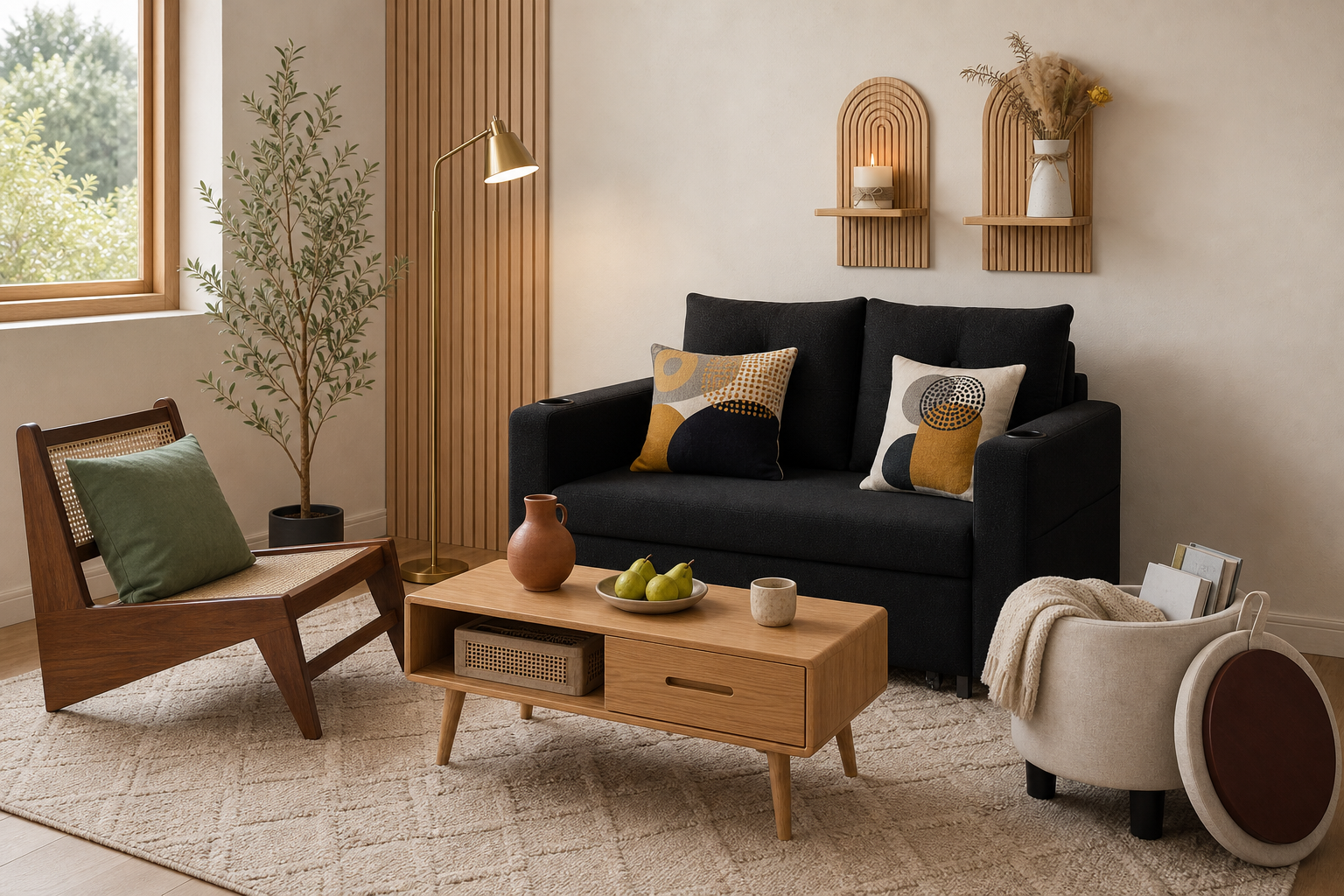
Generated room images are inspiration, not a checkout receipt.
Product photos identify the exact linked items. Room concepts show a
decorating direction so you can imagine the combination before
deciding what belongs in your own space.
I use room concepts to test whether products feel useful together
before recommending them. Product photos identify the exact items, and
retailer links take you to Amazon for current prices, sizes, colors,
availability, reviews, shipping details, and purchase options.